Product design for products that outgrew their interface.
Research, flows, UI and a design system for SaaS, mobile and AI products. Senior designers who work inside your sprints, next to your PM and engineers.
- users using products we've shipped
- 100M+
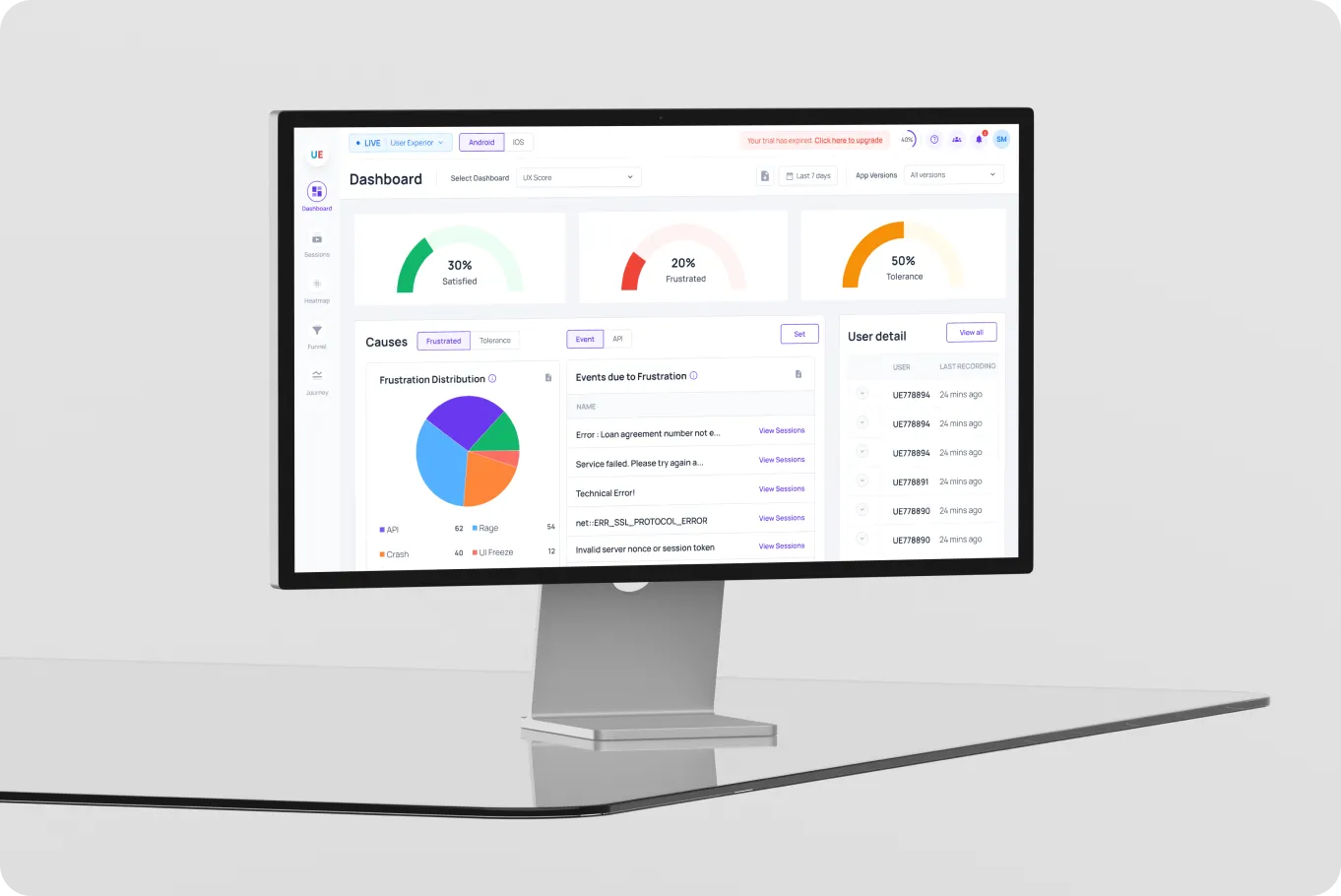
- to redesign UserExperior's web app before its acquisition
- 12 weeks
- embedded with Volt across app, web and brand
- 2+ years
Trusted by founders at


















Product design is a retention decision.
The product works and people use it. What we change is how quickly new users get value and how easily your team ships the next feature.
What a product that outgrew its design costs.
v1 shipped, people use it, and it's starting to show. These are the usual symptoms.
- 01
Features got bolted on
Each release added a tab, a modal or a setting. Nobody remembers why the settings page looks like that, and users can't find things.
- 02
New users don't reach the good part
The value is real but it's three screens too deep. Onboarding loses people before the product can prove itself.
- 03
Every screen is a new debate
Without a design system, design and engineering renegotiate buttons and spacing on every ticket. Shipping slows down.
- 04
The UI undersells the engineering
The product does hard things well and looks like it doesn't. Buyers and investors read the interface as the quality bar.
What's included in product design.
From understanding your users to checking the shipped build. One team the whole way.
- 01
User research
Interviews, usage data and an audit of the current product, so decisions come from how people actually use it.
- 02
Information architecture and UX flows
How the product is organized and how people move through it, mapped before any screen is designed.
- 03
UI design
High-fidelity screens for web and mobile, including the states that get skipped: empty, loading, error.
- 04
Design systems
A component library and usage rules in Figma that your designers and engineers can build from.
- 05
Prototyping and usability testing
Clickable prototypes put in front of real users, so problems show up before engineering time is spent.
- 06
Handoff and QA
Specs your engineers can build from, and design QA on the build until it matches.
How a product design engagement runs.
A redesign runs in stages. Ongoing product work runs in two-week sprints. Either way you review progress every week.
8 to 12 weeks
for a full product redesign
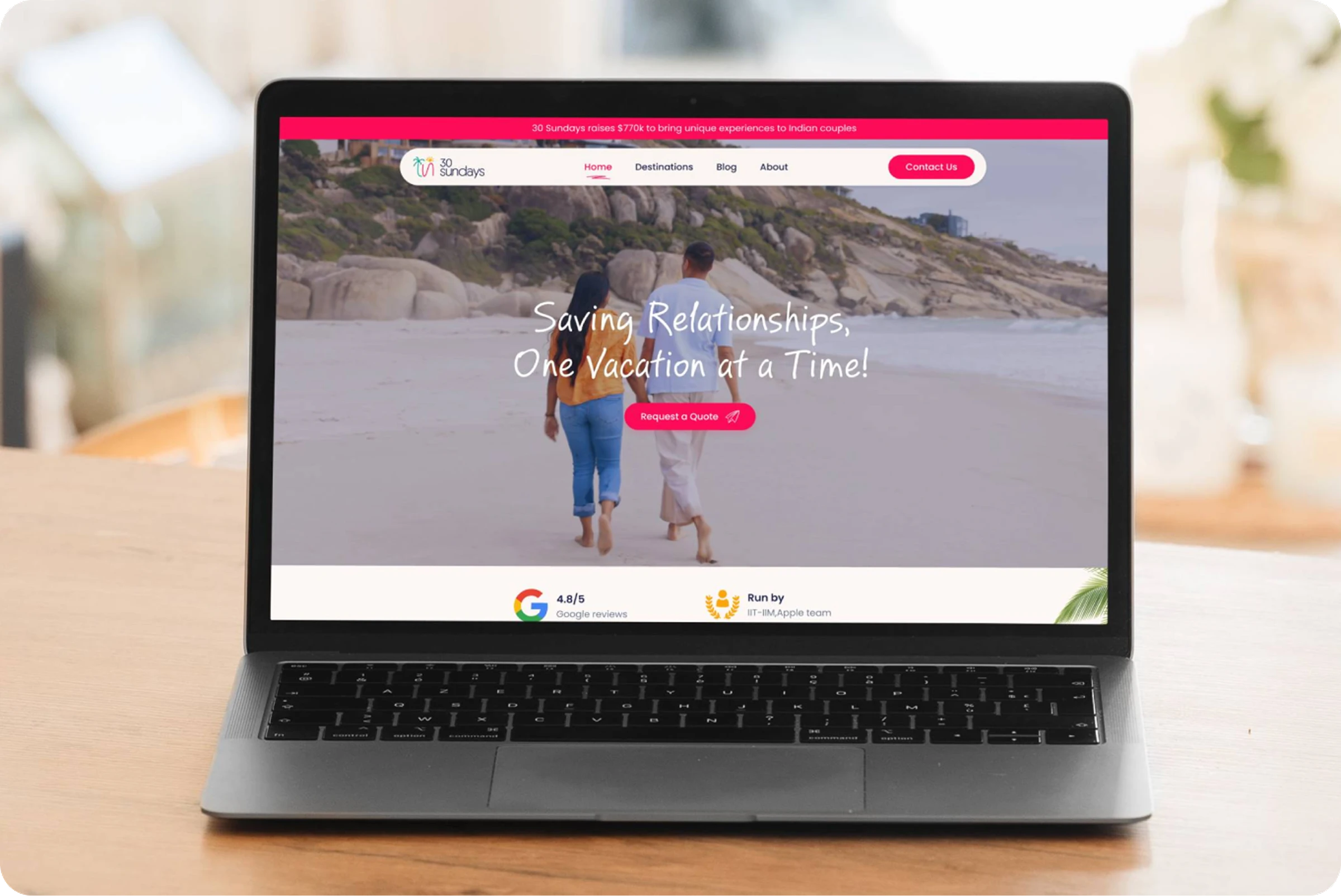
UserExperior's web app was redesigned in 12 weeks. Ongoing product work, like Volt and 30 Sundays, runs as a monthly retainer inside your sprints.
- 1Weeks 1 to 2
Research and audit
User interviews, a look at usage data, and an audit of every key flow. We agree on what's broken and what matters most.
You leave withResearch findings and a prioritized list of problems
- 2Weeks 2 to 4
Flows and architecture
We restructure navigation and the main journeys in wireframes, and test the riskiest ones with a prototype.
You leave withApproved flows and wireframes
- 3Weeks 4 to 10
UI and design system
High-fidelity design, built on a component system as we go. Delivered in batches so engineering can start before design ends.
You leave withFinal UI and a design system in Figma
- 4Weeks 10 to 12
Handoff and QA
Specs and walkthroughs for your engineers, then design QA on the build as it ships.
You leave withA shipped product that matches the design
What product teams say about working with us.
“Working with Hexcode to design our product from scratch was fantastic. They delivered visually stunning, highly usable designs and contributed valuable product insights throughout. I truly enjoyed collaborating with the team and would recommend them to anyone seeking top-tier design expertise.”
 Ajit Kumar PradhanSr. Director of Product Management, Ayla Networks
“Finding a good UI/UX agency is tough. Especially the UX part, because it needs a deep understanding of the consumer and their pain points. I recently worked with Hexcode Designs for 30 Sundays and was super impressed with their user-first thinking. They work less like an agency and more like a plug-and-play product & design partner.”
 Kshitij ChaudharyCo-Founder and CEO, 30 Sundays
“Working with Hexcode has felt like having an in-house design team from day one. They didn't just execute, they shaped product flows, clarified our brand voice, and brought consistency across app, web, and marketing. Over nearly two years, they've been our true partners: responsive and detail-obsessed.”
 Lalit BihaniCEO and Co-founder, Volt Money
“Shabbir and the entire Hexcode team are incredible! Wouldn't be where we are without them. 10/10 support, speed, and quality.”
 Selin KocalarCo-Founder and COO, Delve
More reviews, including video, on The Proof
Who product design is for.
We work on products at every stage after the idea. These are the engagements we see most.
- 01
SaaS web apps and dashboards
Data-heavy products where clarity is the feature, like UserExperior's analytics platform.
- 02
Mobile apps
Native iOS and Android design, from first flows to app store assets, like 30 Sundays and Volt.
- 03
AI products
Interfaces for products where the model does the work and the design has to make that legible and trustworthy.
- 04
A first version, designed properly
You have a prototype or a spec. We design the v1 so you don't spend next year paying off design debt.
- 05
An embedded design team
Hiring a senior designer takes months, and one person can't cover everything. We plug in as the team, month to month.
How long does a product redesign take?
A full redesign usually takes 8 to 12 weeks. UserExperior's web app was redesigned in 12. We deliver in batches, so your engineers can start building before the design work is finished.
How do you work with our PM and engineers?
Inside your process. We join your Slack and standups, work from the same priorities, and run in two-week sprints with a weekly review. You talk directly to the designers doing the work.
Do you build design systems?
Yes. Every product engagement includes a component system in Figma with usage rules, built so new features can be assembled from it rather than designed from scratch.
Do you do user research and usability testing?
Yes. Research comes first in a redesign, and we test prototypes with real users before engineering time is committed.
Can you also build the product?
Yes. Our developers work with the same designers, so nothing is lost between Figma and production. See our development service for how that runs.
How much does product design cost?
We don't publish price tiers because scope changes the number too much. There are three ways to work with us: a fixed-scope project with a fixed timeline and price, a monthly retainer, or hourly for audits and advisory. Book a 30-minute call and you'll have a scoped proposal with deliverables, timeline and cost after it.
Who will we actually work with?
Senior designers and developers, and a founder on every project. No account managers and no handoff to juniors after the sales call. You get a shared Slack channel with the people doing the work.
Three ways to work with us.
All built for how founders actually operate.
No 12-month retainers with vague scopes. No mystery invoices. Pick the model that fits your stage, change it when your stage changes.
Project Based
Fixed scope, fixed timeline, fixed price. For launches, MVPs, brand identities, and marketing sites, with a senior team running it end to end and weekly demos. Start here if you already know what you need built.
Retainer
A dedicated design and dev pod inside your Slack, working off weekly priorities. No scope theatre. Start here if you're shipping continuously and tired of managing freelancers.
Hourly
Direct access to our seniors for advisory, audits, design sprints, and technical reviews. No minimum commitment. Start here if you want an expert opinion before committing to something bigger.